
Duct sealing in existing ducts.
Duct sealing makes leaking ventilation ducts tight again from the inside. No walls or shafts are torn down.
Leaking ducts cause problems in the whole building.
When the ducts leak, the air does not reach the vents. That can mean a failed OVK, odours between apartments, higher energy costs, noise and draughts, and imbalance between apartments.
When BeBo measured ten apartment buildings, the masonry ducts leaked in nine of them (BeBo’s study, PDF in Swedish).
Five signs of leaking ductsA job is done in four steps.
- Inspection. The ducts are filmed and measured: width, length, bends and junctions.
- Preparation. The duct is cleaned if needed. The work area is set up, for example with roof protection.
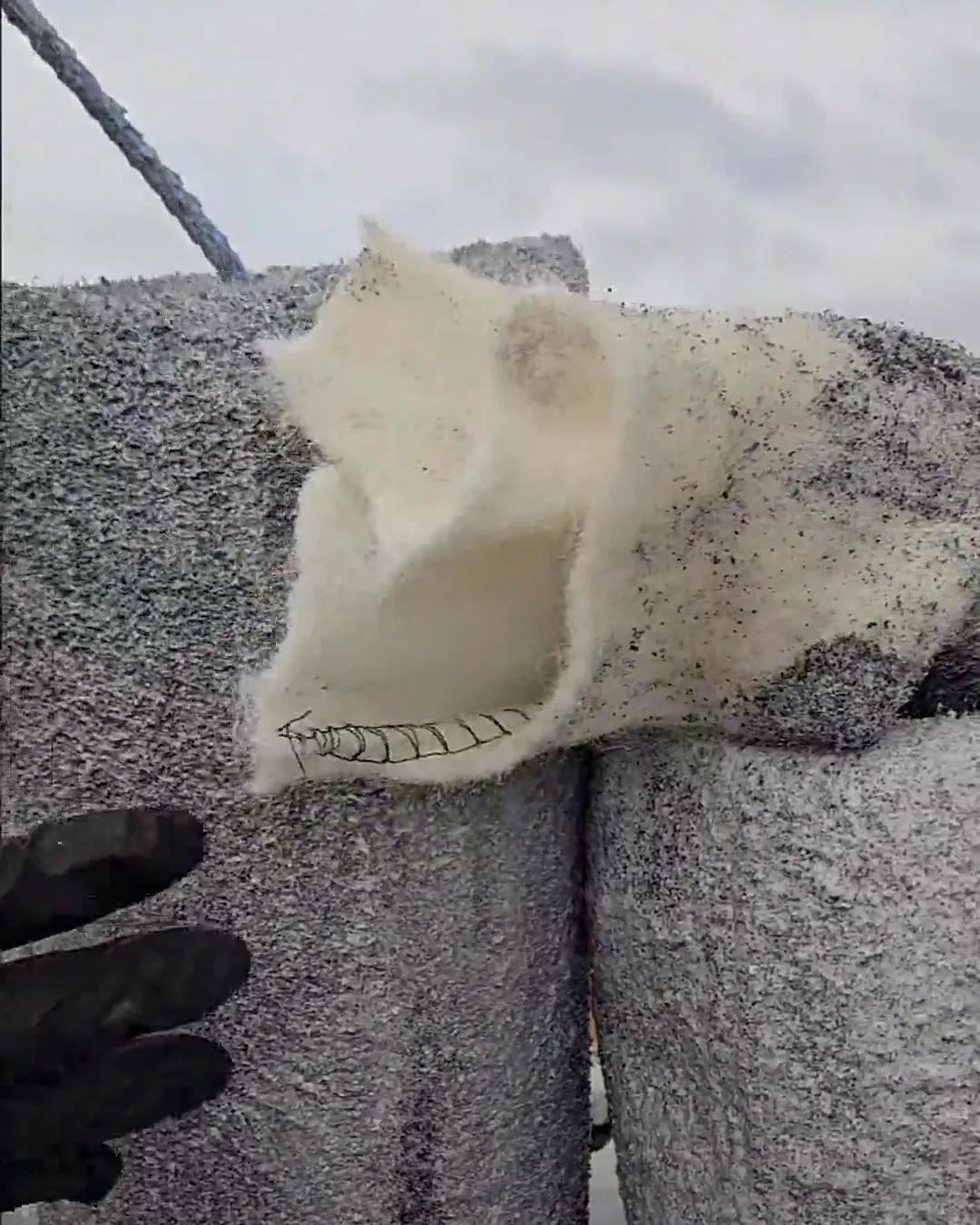
- Lining. The liner is impregnated with polymer and inverted into the duct. The pressure forms it against the duct wall, where it cures into a tight layer.
- Verification. The duct is filmed again and pressure tested. The result is documented.
The liner is formed inside the duct.
Linervent’s meta-aramid felt liner is impregnated with polymer before installation. The polymer is called Sikaflex-404 Inliner. The liner is soft when it is inverted and follows the route of the duct. The same liner can be round at the top and square further down the duct.
Residents stay at home.
A job normally takes two working days per riser. Each apartment is visited twice for a short time, for the inspection and for the lining.
For people who live in the buildingThe circumference determines the liner.
Round and rectangular ducts are sized by circumference. The calculator shows which liner fits and how much polymer it needs.
Choose a liner and calculate polymerLinervent installation manualPDF, 1.76 MBTG 1825 type approvalPDF, 615 kB, Swedish